My Music & the BL Lacerta Improvisation Ensemble
David P. Anderson
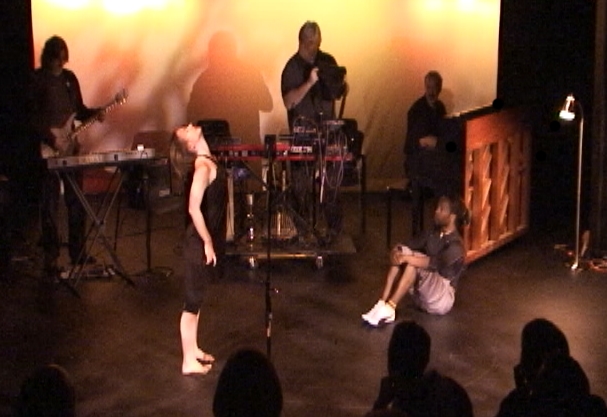
Hubert Pralitz, Bethany Wildes, Bob McCready, Adam Eason, Aaron Kozak, David Anderson
David Anderson, Hubert Pralitz, Adam Eason, Jonathan Anderson, Shelby Stanley, Tawanda Chabikwa
David Anderson, Bethany Wildes, Adam Eason, Kevin Hanlon, Tawanda Chabikwa, Jonathan Anderson, Hubert Pralitz
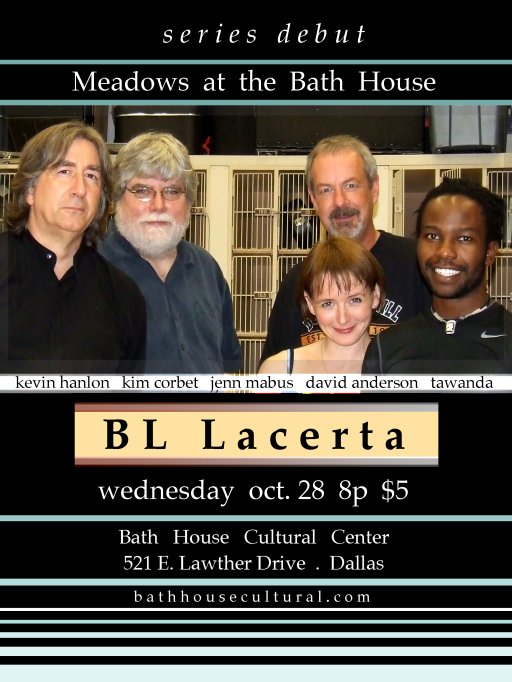
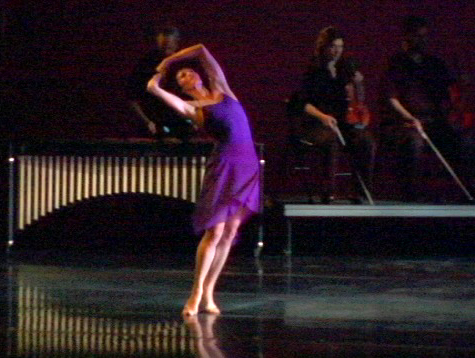
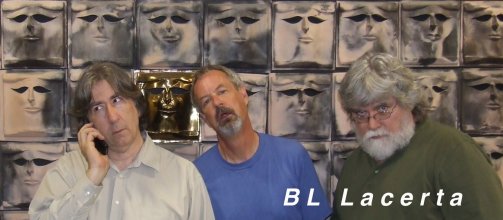
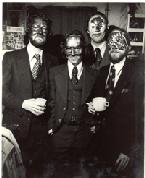
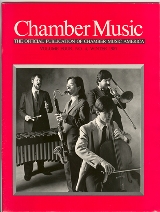
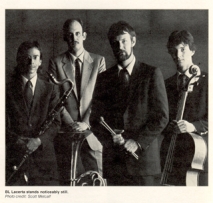
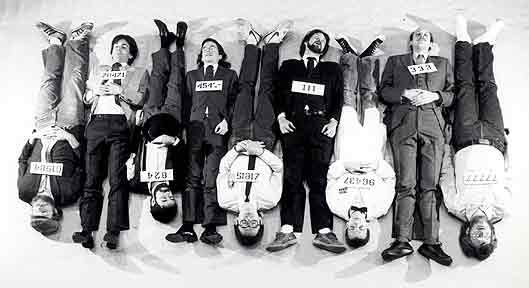
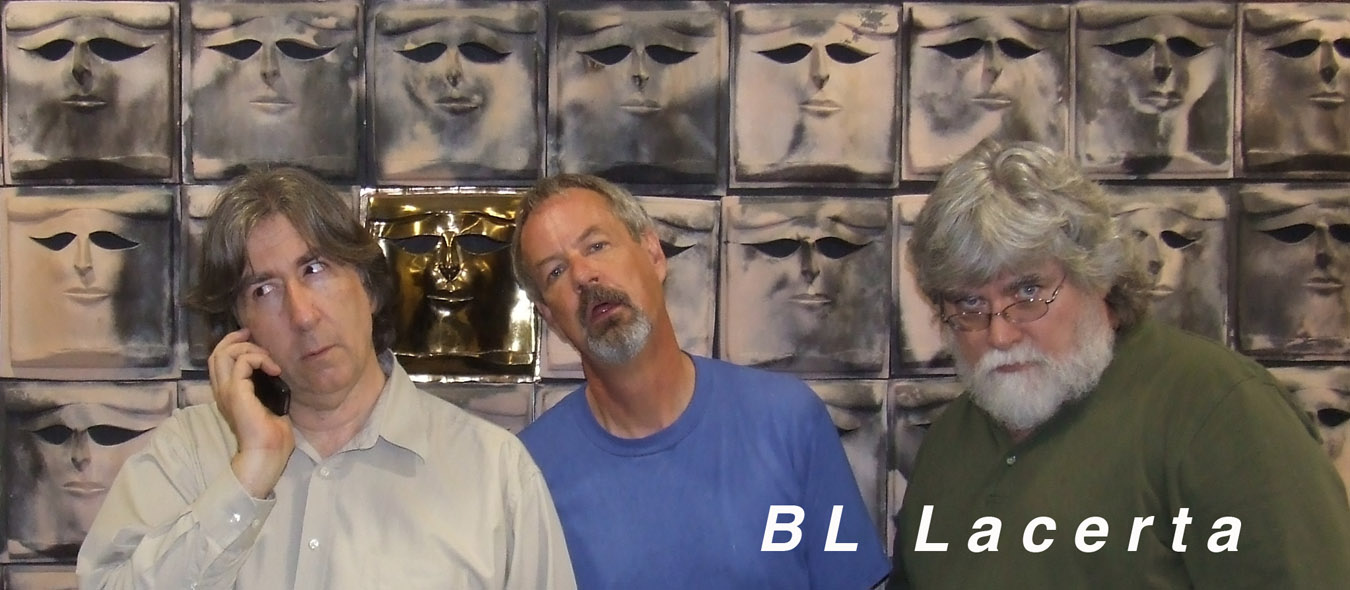
Members of BL Lacerta Past and Present.
(click on the pictures for larger images)

The magnificent duo of Scott Roller and Ulrike Stortz
were in town a few summers ago
and I joined them in an
amazing four hour recording session in the O'Donnell Concert Hall
at Southern Methodist University. Here are a few of the
fifteen pieces created that evening.
The Seven by Seven Trio
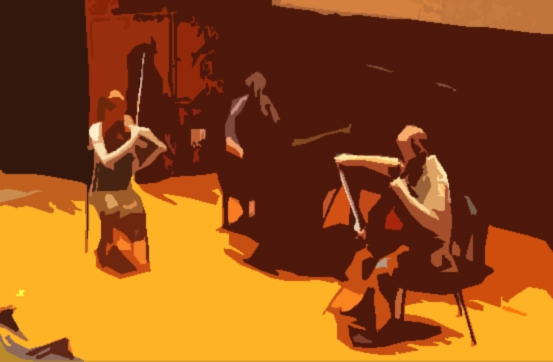
Ulrike Stortz, David Anderson, Scott Roller
Staff Association Improvisations 11 December 2024
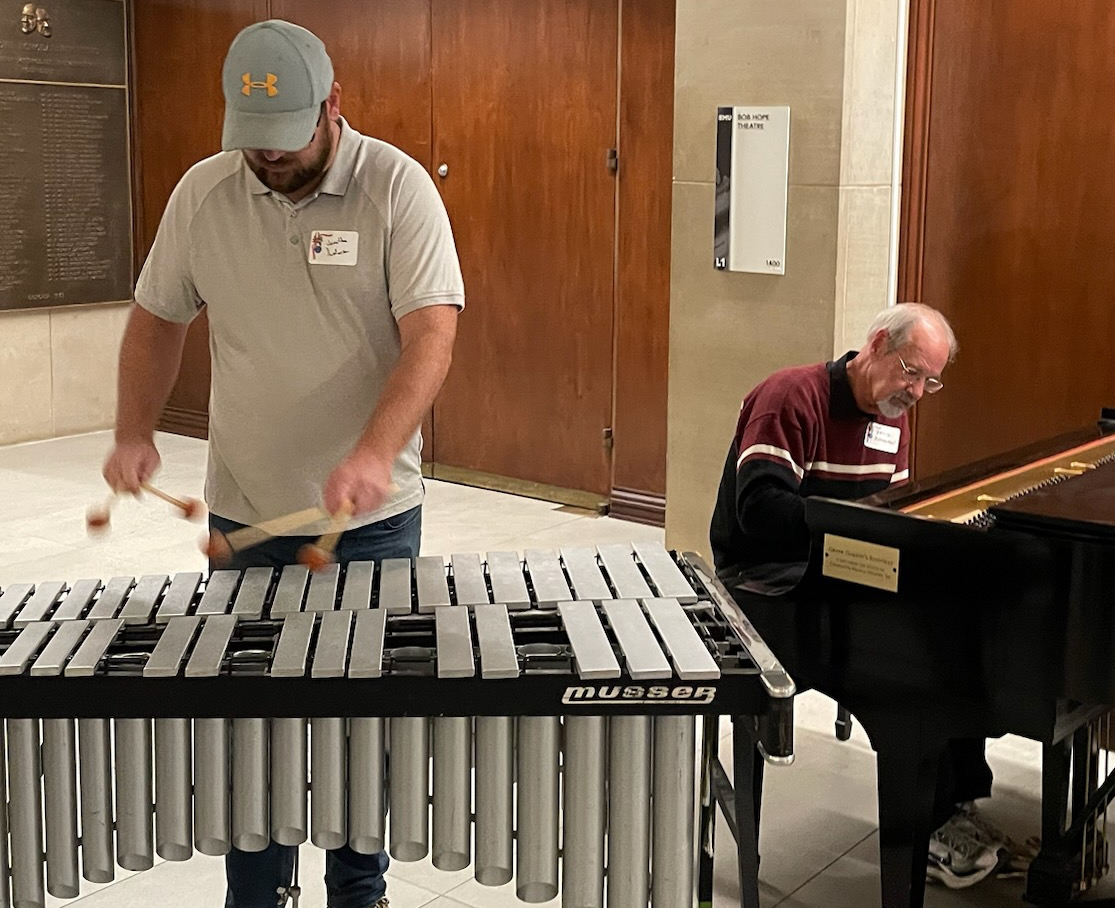
Jonathan vibes, David piano
Spontaneous Compositions
most popular downloads:
Music
The Seven by Seven Trio #8
(David Anderson, Scott Roller, Ulrike Stortz)
China Doll
(David Anderson)
First Trio
(David Anderson, Hubert Pralitz, Jonathan Anderson)
BL Lacerta @ BuzzBrews
(Kevin Hanlon, Adam Eason, David Anderson, Hubert Pralitz, Bethany Wildes)
Goodbye September
(Katrian Leshan, David Anderson)
Hubert's Master's Recital Encore #2
(Hubert Pralitz, David Anderson)
Jenna's Dance
(David Anderson, Jenna Mitchell)
Kwame Ross #3
(David Anderson)
Seven by Seven Trio #5
(David Anderson, Scott Roller, Ulrike Stortz)
Adegil
(David Anderson)
Video
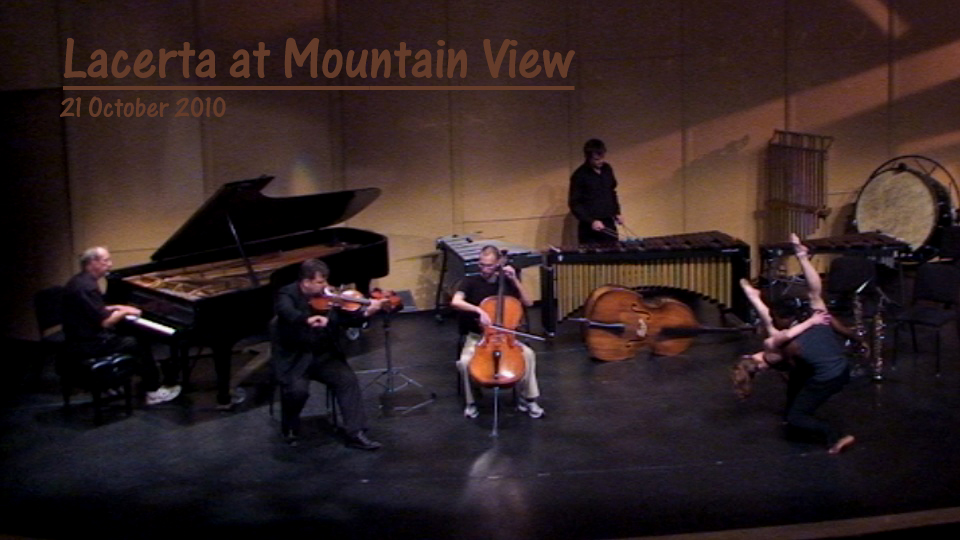
BL Lacerta @ Mountain View
(David Anderson, Hubert Pralitz, Adam Eason, Jonathan Anderson, Shelby Stanley, Tawanda Chabikwa)
I Am The Rape
(Tawanda Chabikwa, Jennifer Mabus, David Anderson, Kevin Hanlon, Kim Corbet)
Tawanda's Celebration #1
(Hubert Pralitz, Bethany Wildes, Adam Eason, David Anderson, Tawanda Chabikwa, Shelby Stanley)
Winter
(Katrina Leshan, David Anderson, Bethany Wildes, Adam Eason, Hubert Pralitz, Shelby Stanley, Tawanda Chabikwa)
Seven by Seven Trio #5
(David Anderson, Scott Roller, Ulrike Stortz)
Video Dance 1995
(David Anderson)
Tawanda's Class at SMU in Spontaneous Composition
(Tawanda Chabikwa, David Anderson, Hubert Pralitz, Adam Eason, SMU Dancers)
Q and Unfinished Sentences
(The Mari Meade Dance Collective, David Anderson, Hubert Pralitz, Adam Eason, Bethany Wildes, Jonathan Anderson)
Vintage
Lacerta Alum Scott Roller has a wonderful collection
early BL Lacerta Recordings at
www.improvised.de
(Scott Roller, Leslie Gay, Robert Price, David Anderson)
27 January 2013 Denton Texas: Music from the Living Room:
David Anderson, Robert McCready, Jonathan Anderson, Bethany Wildes, Hubert Pralitz
Trio 1.wav ---
Trio 1.mp3
Trio 2.wav ---
Trio 2.mp3
Trio 3.wav ---
Trio 3.mp3
Quintet 1.wav ---
Quintet 1.mp3
Quintet 2.wav ---
Quintet 2.mp3
Quintet 3.wav ---
Quintet 3.mp3
Quartet 1.wav ---
Quartet 1.mp3
For the last few years I've been doing a lot of
Music for Dance
 The most current BL Lacerta performance pics, audio and video are over on the
BL Lacerta Dance webpage.
The most current BL Lacerta performance pics, audio and video are over on the
BL Lacerta Dance webpage.
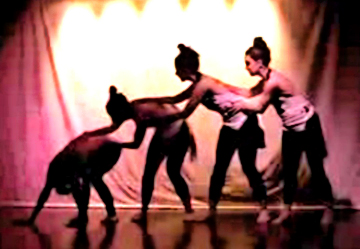
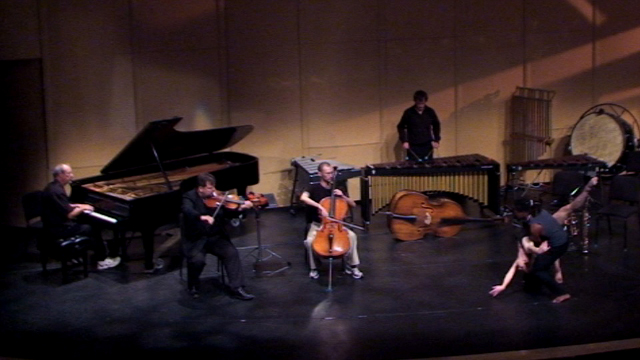
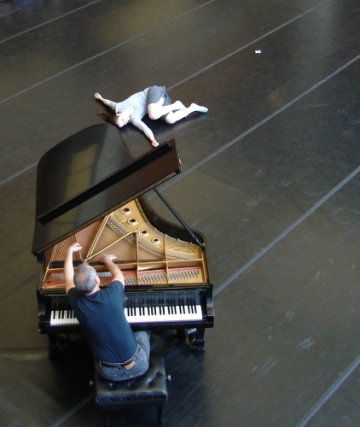
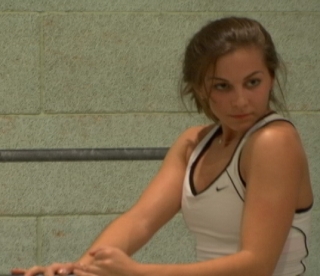
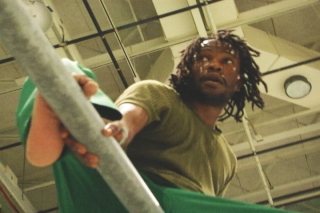
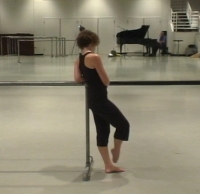
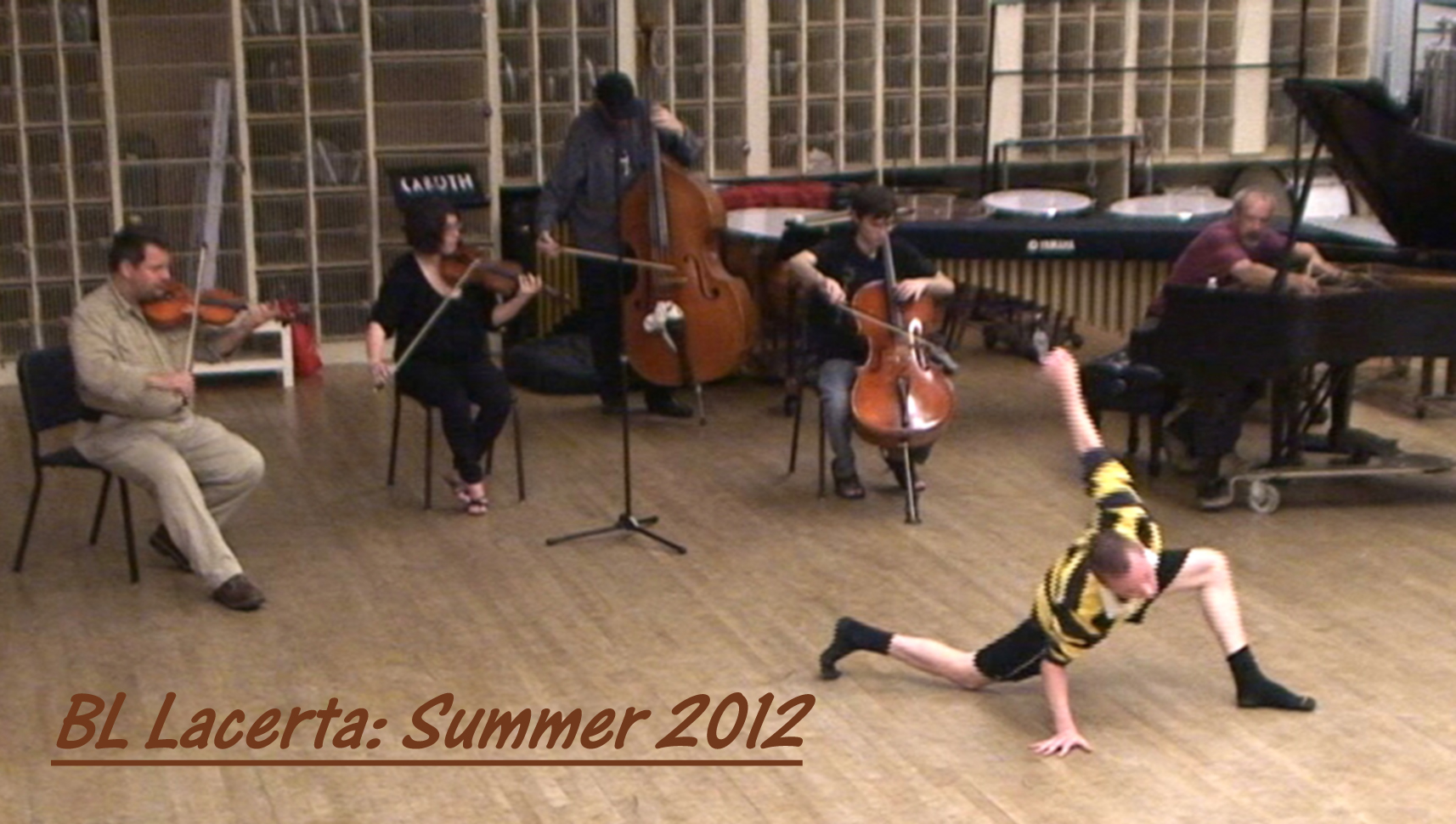
BL Lacerta @ The Band Hall
06 May 2012:
Hubert Pralitz, Bethany Wildes, Robert McCready, Adam Eason, David Anderson, Aaron Kozak, Harry Feril, Shelby Stanley, Deborah Weaver, nBot
mp4 video/mp3 audio:
20120506 Dance No. 1.mp4 - 20120506 No. 1.mp3
20120506 Dance No. 2.mp4 - 20120506 No. 2.mp3
20120506 Dance No. 3.mp4 - 20120506 No. 3.mp3
20120506 Dance nBot.mp4 - 20120506 No. 4.mp3
20120506 Dance elegy.mp4 - 20120506 No. 5.mp3
20120506 Dance No. 6.mp4 - 20120506 No. 6.mp3
15 January 2012
David Anderson, piano,
Adam Eason, 'cello,
Jonathan Anderson, percussion
.wav/.mp3 audio:
20120115_bl 01.mp3 --- 01.wav (hi res)
20120115_bl 02.mp3 --- 02.wav (hi res)
20120115_bl 03.mp3 --- 03.wav (hi res)
20120115_bl 04.mp3 --- 04.wav (hi res)
20120115_bl 05.mp3 --- 05.wav (hi res)
20120115_bl 06.mp3 --- 06.wav (hi res)
20120115_bl 07.mp3 --- 07.wav (hi res)
20120115_bl 08.mp3 --- 08.wav (hi res)
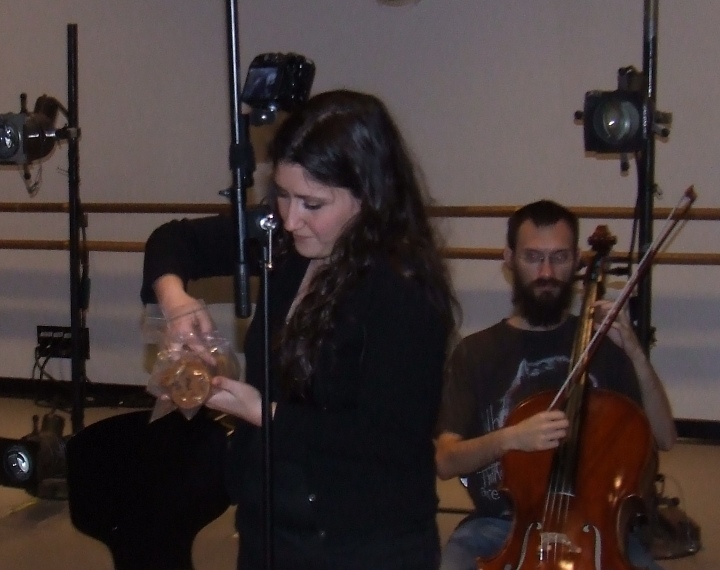
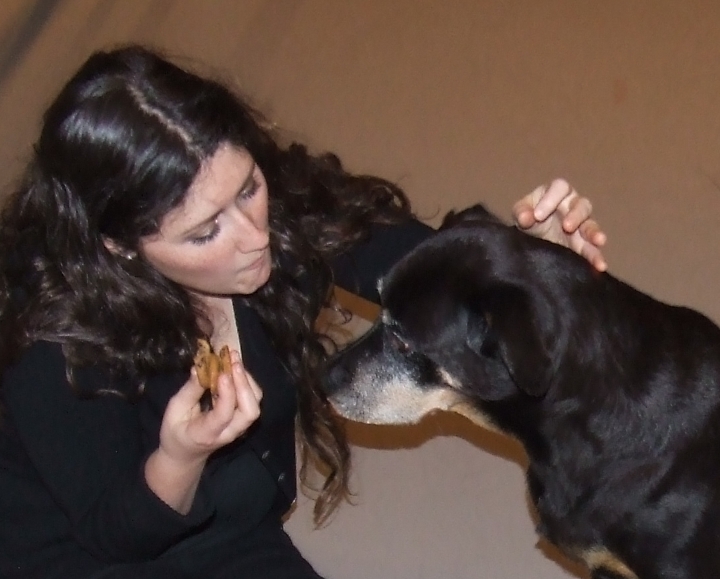
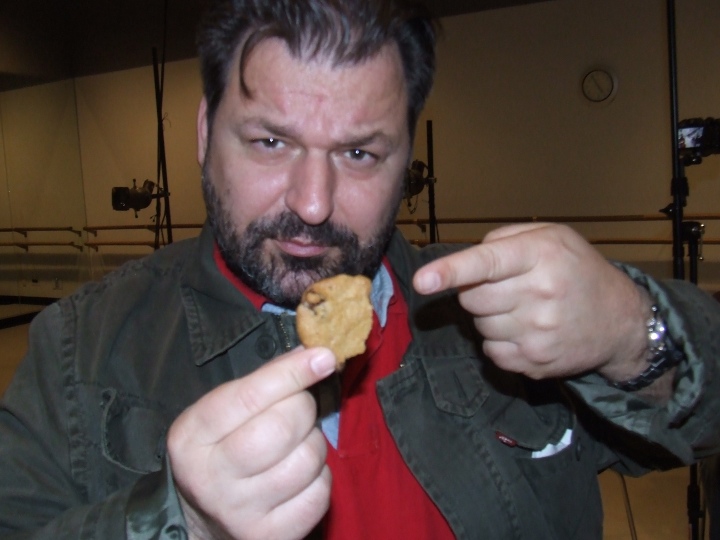
BL Lacerta String Section: Bethany Wildes, Adam Eason, Hubert Pralitz. And Friend.
Powered by Grandma Anderson's Homemade Chocolate Chip Cookies.
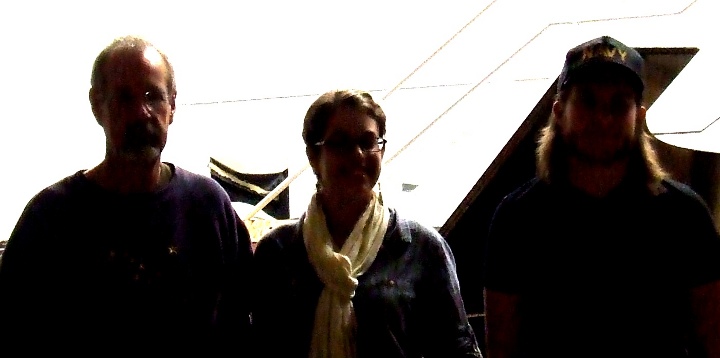
10 October 2011: Katrina and David Improvise Some Songs
Katrina Leshan has this amazing ability to spontaneously generate lyrics and melodies.
Here are three songs we improvised last October in the SMU band hall.
Goodbye September.wav
(also as mp3)
Tightrope.wav
(also mp3)
Pictures.wav
(mp3)
22 April 2012: Here's a couple more:
Ride.wav
Ride.mp3
Walk.wav
Walk.mp3
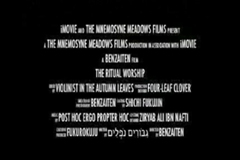
Hubert couldn't make it to rehearsal so he sent this video instead...
BL Lacerta Fall 2011: Ritual Worship of the Ancestors
04 January 2011:
"Making Things Up" BL Lacerta plays Classical Open Mic at BuzzBrews in Dallas.
Kevin Hanlon, Adam Eason, David Anderson, Hubert Pralitz, Bethany Wildes
05 May 2011:
Encore #2 from Hubert Pralitz Master's Recital at Southern Methodist University.
Hubert Pralitz, violin, David Anderson, piano
Hi-Res Audio:
Encore #2 Hubert Pralitz Master's Recital.wav
26 May 2011: Senior Dance Composition Class Finals at
Booker T. Washington High School for the Visual and Performing Arts,
David Anderson, piano.
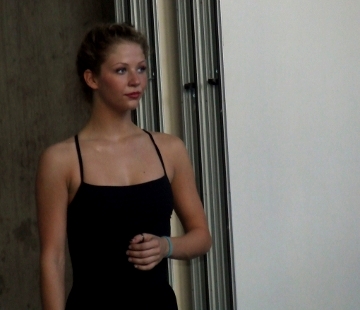 This was a really fun project. Jennifer Mabus and Kate Walker's amazing senior dance students choreographed their final projects in silence, and then
performed them for their final grades to improvised accompaniments. Here's the audio of a few. You'll have to imagine the dances. They were very cool.
This was a really fun project. Jennifer Mabus and Kate Walker's amazing senior dance students choreographed their final projects in silence, and then
performed them for their final grades to improvised accompaniments. Here's the audio of a few. You'll have to imagine the dances. They were very cool.
BTWHSVPA_A.wav (mp3)
BTWHSVPA_B.wav (mp3)
BTWHSVPA_C.wav (mp3)
BTWHSVPA_D.wav (mp3)
BTWHSVPA_E.wav (mp3)
BTWHSVPA_F.wav (mp3)
Over the years I've written quite a lot of music, but my real passion is improvisation, especially group improv.
Spontaneous Composition
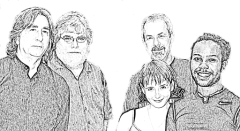
The BL Lacerta Quintet 2009 (.pdf)
Here's an improvisation from last October's (2009) concert at
The Bath House Cultural Center on Whiterock Lake in Dallas:
BL Lacerta@theBathHouse: Dance #3 (118M mp4)
Here's the whole concert:
BL Lacerta@theBathHouse (552M mp4)
03 July 2009
Studio 1430
"Piano Suite for Morgana Phlaum"

Prelude.mp3
Dance 2.mp3
Dance 3.mp3
Dance 4.mp3
BL@theBandHall
13 April 2010:
David Anderson, piano,
Jonathan Anderson, percussion,
Hubert Pralitz, violin
Audio
BL@theBandHall 13 April 2010 #1.mp3
BL@theBandHall 13 April 2010 #2.mp3
BL Lacerta @ SMU Rm 2020
30 March 2010:
David Anderson, piano,
Jonathan Anderson, piano,
Adam Eason, 'cello
Audio
BL Lacerta@SMU 30 March 2010 #1.mp3
BL Lacerta@SMU 30 March 2010 #2a.mp3
BL Lacerta@SMU 30 March 2010 #2b.mp3
BL Lacerta@SMU 30 March 2010 #3.mp3
BL Lacerta@SMU 30 March 2010 #4.mp3
BL Lacerta@SMU 30 March 2010 #5.mp3
BL Lacerta@SMU 30 March 2010 #6.mp3
BL Lacerta@SMU 30 March 2010 #7.mp3
BL Lacerta@SMU 30 March 2010 #8.mp3
BL@theBandHall
06 April 2010
David Anderson, Jonathan Anderson, Adam Eason, Kevin Hanlon
and Jennifer Mabus
Audio
BL@theBandHall 06 April 2010 #1.mp3
BL@theBandHall 06 April 2010 #2.mp3
BL@theBandHall 06 April 2010 #3.mp3
BL@theBandHall 06 April 2010 #4.mp3
BL@theBandHall 06 April 2010 #5.mp3
BL@theBandHall 06 April 2010 #6.mp3
20 October 2009:
BL Lacerta at the BandHall
BL Lacerta 20 October 2009 - Dance #1.mp3
BL Lacerta 20 October 2009 - Dance #2.mp3
BL Lacerta 20 October 2009 - Dance #3.mp3
29 July 2009
SMU Meadows Rm 2020
BL Lacerta Trio
David Anderson, Kim Corbet, Kevin Hanlon
Trio #1 (10M mp3)
Trio #2 (13M mp3)
Trio #3 (15M mp3)
10 February 2009
SMU Meadows Hope Lobby
BL Lacerta Quintet
David Anderson, Kim Corbet, Kevin Hanlon, Stuart Cheney, Michael
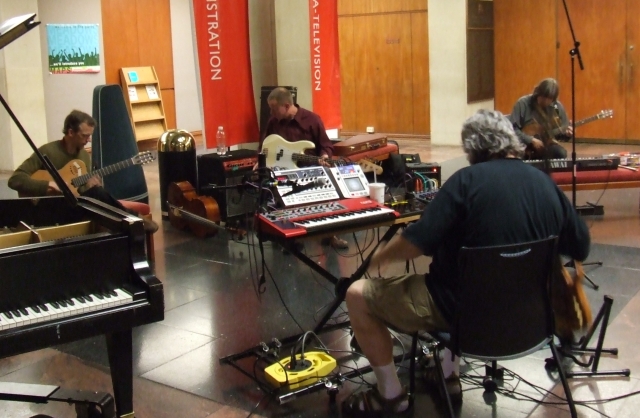
"Everything But The Air" (15M mp3)
"Guitar Speak" (6M mp3)
23 October 2008
BL Lacerta/2:
David Anderson and Kim Corbet.
BL Lacerta/2: Late in the evening on an October Thursday we set up in Kim's office in the Meadows building, with his electronics and keyboards and a Baldwin spinet upright piano for me to play. Here are some mp3s from the evening, each about 10 megabytes.
23 October 2008 Improv #1 (7M mp3)
23 October 2008 Improv #2 (8M mp3)
23 October 2008 Improv #3 (6M mp3)
23 October 2008 Improv #4 (10M mp3)
06 June 2008
Improvisations for
Breanna Gribble's Modern Class.
I went over to the SMU Meadows building Friday evening June 6th with the multi-talented
geophysicist/dancer/choreographer and all around smart gal
Breanna Lauren Gribble
to record some piano music
for a modern dance class she is teaching next week. We found an Empty Dance Studio with Steinway Grand Piano (most bless-ed
of all studios) and recorded these little piano improvisations while she danced. I hadn't accompanied for many
years and my hands were rusty and I was initially quite nervous. But as we warmed up and settled
down my heart opened and began to sing, just like in the
before-time, and I stopped thinking about my hands and just played.
I especially like the 6th improvisation in the suite which seemed to spring forth unbidden, like with Lacerta, and I think 2nd and 3rd are lovely as was the
dancing that inspired and accompanied them. I kick myself that I did not video Breanna's movement.
We did some wonderful free improv before setting up the equipment to record these little pieces.
I should have learned by now to record and video everything, especially with improv --- you never know when the muse will appear.
In addition to the Steinway, this studio also has what appears to be an old man
asleep in the closet. You can hear him snoring on some of the recordings. Breanna says he's been there for years.
Dance Suite for The Old Man Asleep In The Closet
13M mp3 audio
Breanna
vanished
away to
study geophysics in New Mexico
but I've continued to wander over to the Meadows building in the evenings to find a piano and play. Here are some of the improvisations.
The first one,
"Celerity"
is a geophysics term that roughly translates as average velocity, after the slowly increasing tempo of the piece (and my congenital tendency to rush every tempo!)
"Earth Dance"
is a massive dance piece for
Breanna,
recorded on the world-class Steinway Grand Piano that is kept locked in the "O'Donnell Performance Hall" at SMU (thanks Michael!).
"Mafic Intrusions"
is a term I like from structural geology which I've always thought sounded vaguely obscene.
The other pieces were inspired by my
friends
and fellows at
The Huff. My current favorites are
"Celerity" and
"The Tall Waltz,"
a ballsy waltz for six foot (and taller!) ballerinas en pointe. More recently I sat down in the Old Man's studio to practice scales and arpeggios and found myself fumbling along in D flat minor and
David's Lament appeared under my fingers.
"Pitch a Ball"
is a set of improvisations on the guitar lick from Howlin' Wolf's "Wang Dang Doodle" and
"ciao, ciao for now"
is a fond goodbye.
More Music for The Old Man Asleep in the Closet.
Celerity (13M mp3)
Earth Dance (6M mp3)
Music for the Baker's Birthday (8M mp3)
Jenny's Lament (7.7M mp3)
The Tall Waltz (7.3M mp3)
Mafic Intrusions (12M mp3)
12 September 2008
David's Lament (11M mp3)
21 January 2009
Pitch a Ball (7.3M mp3)
(Variations on a theme by Howlin' Wolf)
ciao, ciao for now (6.6M mp3)
And then one day, just like magic, Breanna reappeared. She delivered a paper she had authored on Geo-Magnetics.
She did some Infrasound research with us. Then she picked up her paycheck, sold her bed, packed up her things and said goodby to everyone, designed and shot a TV commercial for a new PUMA shoe on her way out of town, and headed off to Europe to dance, by way of Colorado and the Grand Canyon.
This is the gospel truth.
Just before she left we went back to the old man's studio and performed her last three dances at SMU.
And I got
video this time!
The Before-Time*
I spent five years in the early '70s at the University of North Texas
Center for
Electronic Music working with the great sage Merril Ellis. I have most
of that music on reel-to-reel tape (agh!) but a few pieces survived into the digital
age. We had a nice recording studio with two
Ampex 350 two track stereo decks, an
Ampex 440 four track deck, and several
Putney,
Arp, and
Moog,
synthesizers in a little house on
Mulberry Street. Before "sampling" was a technical possibility we recorded and spliced
magnetic tape in a form of music styled "Musique Concrete."
Trek (8.2M mp3) is one of the pieces that has survived, composed
in 1974 from recordings of three different episodes of StarTrek. I had a lot of fun
making this piece, and it has been featured since then at a several Star Trek
conventions (for reasons that are not altogether clear to me...)
On The Spot (5.2M mp3) is a sound-mass piece commissioned by the
Woodrow Wilson Elementary School All Star Choir, where my sons attended school. Sound-masses like
the bubbling of a creek, rainfall on the roof, a chorus of frogs, or the incredible dense song of
night creatures are all musical textures made of large numbers of individual similar sounds. Most
people are familiar with these textures from movie scores and incidental sounds, but composers
dating back to the early 1900s have employed these timbres for theatrical and dramatic effects.
This recording is from a performance at the Texas Music Educators Association
(TMEA) in San Antonio, Texas, in 1999, conducted by myself, and
performed by a bunch of fearless
4th and 5th graders who blew the roof off the building. Once the kids understood what I needed
them to do, their creativity was absolutely astounding. If you listen carefully to the
final cadence, you can hear a baby cooing softly in the audience. One of the girls in
the choir picks up on the note exactly and weaves the baby deftly into the final chords,
a lovely and extremely sensitive finale.
Mudrussel (4.0M mp3) was my first piece written on the new
Moog synthesizer, about 1973. I originally made a piano four-hand
arrangement and recorded it on the studio's four track Ampex machine. When we got the new synthesizer
I went back and pieced together the tracks one by one by over dubbing against the original two track
mix down of the piano version, which worked moderately well.
Sound synthesis has come a long way since those days, particularly
the synthesis of traditional orchestral sounds. These tracks were essentially hand assembled from
simple oscillators and filters. Tuning and control of intonation and signal drift were constant
problems as the temperature in the Chilton Hall and Mulberry Street studios wandered around both summer
and winter. If we had access to the instruments my son uses today, we could have RULED THE WORLD!
Six Big Ones (5.1M mp3) is another musique concrete piece
composed from recordings made off the radio one evening in 1972, featuring snipets of pop music
of the day and a happy radio evangelist from Tulsa Oklahoma selling his wares. Part way through
the evening a couple of young ladies tripping on LSD dropped by the studio and I stuck a mic in front
of them and made them sing. Several hundred tape splices later this humourous piece emerged.
Adegil (6.3M mp3) is my favorite tape piece from my days at the UNT
Electronic Music Studio. Written in 1975, it is constructed entirely from human voices, mostly
mine and my friends', tape recorded and modified electronically and manipulated physically with
all the techniques I had learned in my time working with Merril Ellis. The ethereal sounds in
the final section were created by a technique suggested by my father, a physicist who taught
musical acoustics, singing into a piano. I had an operatic soprano sing into the un-damped
strings of a giant Steinway. This causes only the strings which match the overtones of the
voice to ring. The ring is what we recorded, producing a hauntingly human and yet not-quite-human
sound.
Here's the hi-res .wav audio Adegil.wav(66M).
I spent a year in 1978-1979 as
Composer-in-Residence
at North Carolina State University in Raleigh,
writing music for various college ensembles, the men's chorus, percussion ensemble and the
concert band, and had a similar job two summers in the late 70s at the American Institute of Musical
Studies in Graz, Austria; most of that music has been lost in the ether.
 I pretty much stopped composing when I began performing, in 1979, with the
BL Lacerta
Quartet, of which more is written below, and which had a profound influence
on my life. So after a 15 year hiatus from composing, I ventured back into the woods with some trepidation.
Most of my recent music has been much more traditional melodic and rhythmic compositions, written
on the computer (who'd of guessed?) using my
son Jonathan's electronic keyboards, and often inspired by the machines' capabilities.
I pretty much stopped composing when I began performing, in 1979, with the
BL Lacerta
Quartet, of which more is written below, and which had a profound influence
on my life. So after a 15 year hiatus from composing, I ventured back into the woods with some trepidation.
Most of my recent music has been much more traditional melodic and rhythmic compositions, written
on the computer (who'd of guessed?) using my
son Jonathan's electronic keyboards, and often inspired by the machines' capabilities.
I sent a CD of some new pieces to my friend, composer, music producer and general talented smart guy
Arthur Barrow a couple of years ago. He liked the bass lines (which pleased me; he's a bass player)
but his main question was, "Why so conservative?" So maybe I've been out of the woods too long.
Here are some downloadable mp3 files of some recent pieces:
The Bug (5.5M mp3) is a piece I put together this Christmas (2002) with
a new midi keyboard my parents bought for me. The themes were actually composed in the late 1980s
with the birth of my sons, one theme for each son, and woven together contrapuntally on an enormous
Synclavier belonging to William Rollow. I re-orchestrated the whole thing in a week of all-nighters over the holidays. Piano, horns, flutes, percussion.
The Lion Queen (4.3M mp3) is a dance for double-bass, pan-pipes,
percussion and strings. I particularly enjoyed writing the bass line, as bass is sort of
a half melodic and half percussion instrument.
My Scheherazade (4.6M mp3) was written for my wife as she came
dancing through the garage one spring afternoon, syncing the movement of her walk to the
sultry melodies I was improvising at the time. She really is my Scheherazade.
Weather Channel (4.3M mp3) is a passacaglia inspired by
the background music played on the cable radar channel. I started to name it "Passacaglia,"
which is an ancient form based on a set of variations on a repeated bass line, but its just
too darn hard to pronounce. I had a lot of fun with the form of this piece.
Bali (1.4M mp3) is not really very much like real Gamelan music of
Java and Bali, of which the BL Lacerta Quartet was much influenced, but it has an oriental
flavor and I was looking for an excuse to use the cool ethnic timbres of one of our keyboards.
China Doll (5.5M mp3) started as a pentatonic whimsy and wandered
through blue grass to a sort of Hollywood-John-Ford-Western feel. It's really just a vamp, sonic wallpaper
suitable for a drive through the countryside with the volume down low. It ends with a long slow
fade, intended to fall below the noise level without the listener noticing. That sort of thing
doesn't work too well with digital media, I've discovered. Too much gain compression and
too much compression noise. It's a gentle piece nonetheless.
Clock Works (4.1M mp3) is a percussion and orchestration
exercise in which
a single musical phrase is orchestrated and re-orchestrated through a series of variations.
That turns out to be really easy to do with a MIDI sequencer. Each line of the initial phrase takes
its turn as the melody, and each as accompaniment, with all sharing equally in the final cadence.
I always thought this piece would be cool performed by a highschool marching band.
Igor Stravinsky felt that, no matter how International a composer's style might be,
he reveals his roots and true origin when he writes songs with lyrics. I suppose this
must be true
in my own case, because all the songs I've written seem to turn into country and western
without my intention.
Here are some lyrics to some songs I've written over the years,
or least the ones I can still remember.
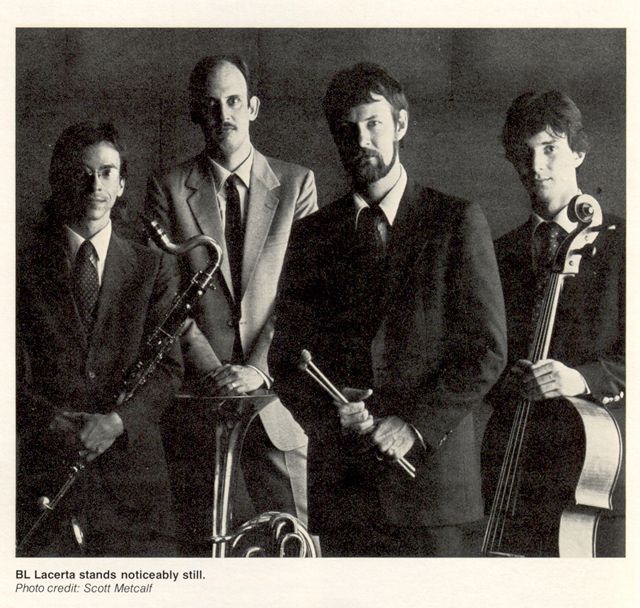
 As mentioned above I began performing regularly in 1979 with the BL Lacerta
Improvisation Quartet. This ensemble was an orchestra in miniature, with one string
player, (originally violist Maurice Hood, later 'cellist Scott Roller, and later still
'cellist Tom Green) one woodwind, clarinetist Robert Price, one brass player (originally
tubist Les Gay, later trombonist Kim Corbet) and one percussionist, myself. I originally
joined the group intending to write compositions for these very talented individuals, but
I quickly found that we could improvise music so much more profound and sophisticated and
majestic than I could conceive that the urge "to music" was satisfied.
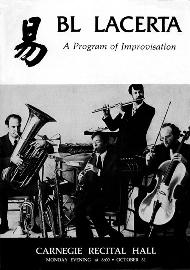
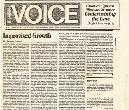
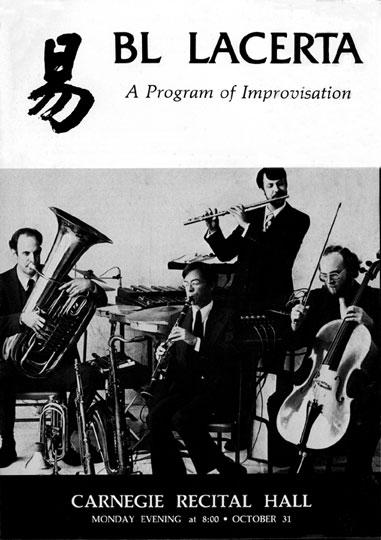
This flier is from our New York Debut at Carnegie Hall in 1983. Gregory Sandow from the
Village Voice wrote an
extremely nice review after the Carnegie concert.
As mentioned above I began performing regularly in 1979 with the BL Lacerta
Improvisation Quartet. This ensemble was an orchestra in miniature, with one string
player, (originally violist Maurice Hood, later 'cellist Scott Roller, and later still
'cellist Tom Green) one woodwind, clarinetist Robert Price, one brass player (originally
tubist Les Gay, later trombonist Kim Corbet) and one percussionist, myself. I originally
joined the group intending to write compositions for these very talented individuals, but
I quickly found that we could improvise music so much more profound and sophisticated and
majestic than I could conceive that the urge "to music" was satisfied.
This flier is from our New York Debut at Carnegie Hall in 1983. Gregory Sandow from the
Village Voice wrote an
extremely nice review after the Carnegie concert.
 We were together for 15 years in one form or another, performed hundreds of concerts both
solo and with guests artists like
John Cage
and Pauline Oliveros, dancers from Merce Cunningham
and Erik Hawkins companies, sculptors,
theater troupes, and dozens of live performance scores for classic silent films.
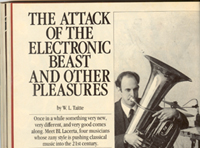
Music critic Lawson Taitte came to hear us perform in Dallas and attended several rehearsals and
then wrote
a really great article about us featured in the November 1981 edition of Texas Monthly
Magazine.
We were together for 15 years in one form or another, performed hundreds of concerts both
solo and with guests artists like
John Cage
and Pauline Oliveros, dancers from Merce Cunningham
and Erik Hawkins companies, sculptors,
theater troupes, and dozens of live performance scores for classic silent films.
Music critic Lawson Taitte came to hear us perform in Dallas and attended several rehearsals and
then wrote
a really great article about us featured in the November 1981 edition of Texas Monthly
Magazine.
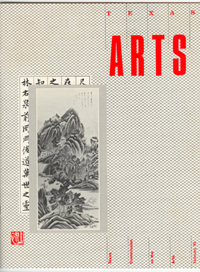 Texas Arts Magazine did a very friendly
profile of the quartet in February of 1985.
Someday I'll put together
a history of the ensemble worthy of the effort, but for now I've collected some links below
that hint at what the group accomplished. It made a huge impact on my life and I believe
the other musicians would agree that we were collectively much more than the sum of the parts.
I miss it greatly, especially the rehearsals. 'Cellist and composer Scott Roller, who now
makes his living in Germany, once wrote me that "...despite all I have done since that time,
Texas Arts Magazine did a very friendly
profile of the quartet in February of 1985.
Someday I'll put together
a history of the ensemble worthy of the effort, but for now I've collected some links below
that hint at what the group accomplished. It made a huge impact on my life and I believe
the other musicians would agree that we were collectively much more than the sum of the parts.
I miss it greatly, especially the rehearsals. 'Cellist and composer Scott Roller, who now
makes his living in Germany, once wrote me that "...despite all I have done since that time,
 and the pride I've taken in my music and performances, I've never experienced that same sense
of reverence, of walking off stage loving my fellow musicians, awed by what we had just experienced."
That says it exactly for me.
and the pride I've taken in my music and performances, I've never experienced that same sense
of reverence, of walking off stage loving my fellow musicians, awed by what we had just experienced."
That says it exactly for me.
I recently ran a google search on the BL Lacerta quartet and was surprised at all the
links I found. Here are just a few:
Here is a nice writeup about us by the good folks
at Coma music. Scroll on down to where they talk about their background.
Our "rare" LP recording on IRIDA
Cellist Scott Roller's Home Page
Trombonist and Musician Extraordinare Kim Corbet
Clarinetist and Birdman Robert Price
The BathHouse Cultural Center Anniversary, where we gave lots of concerts.
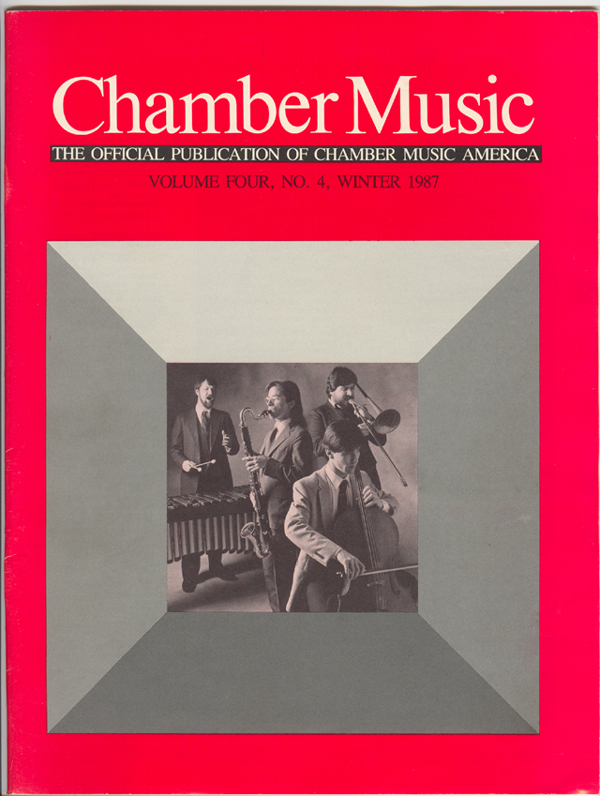
Chamber Music America, who supported and nurtured us for many years.
Tubists Universal Brotherhood
Composer Mike Matthews whom we commissioned in 1982 (? I think)
Brass Music of Finland
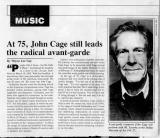
Discussion of John Cage (we commissioned a piece from John Cage shortly before his death, and performed it with
him in an amazing live concert at the Dallas Museum of Art. I still have his hand autographed score, somewhere).
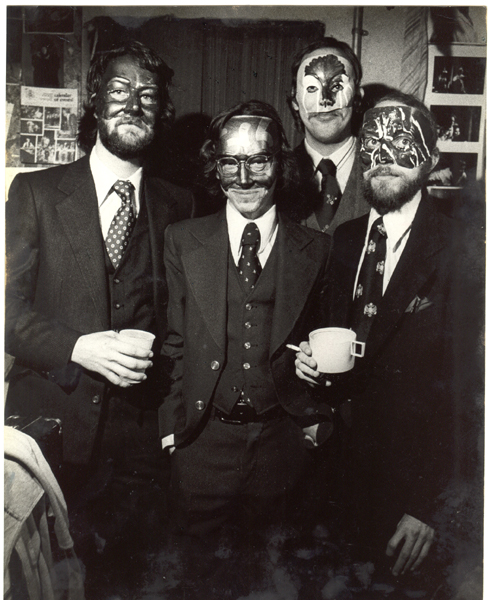
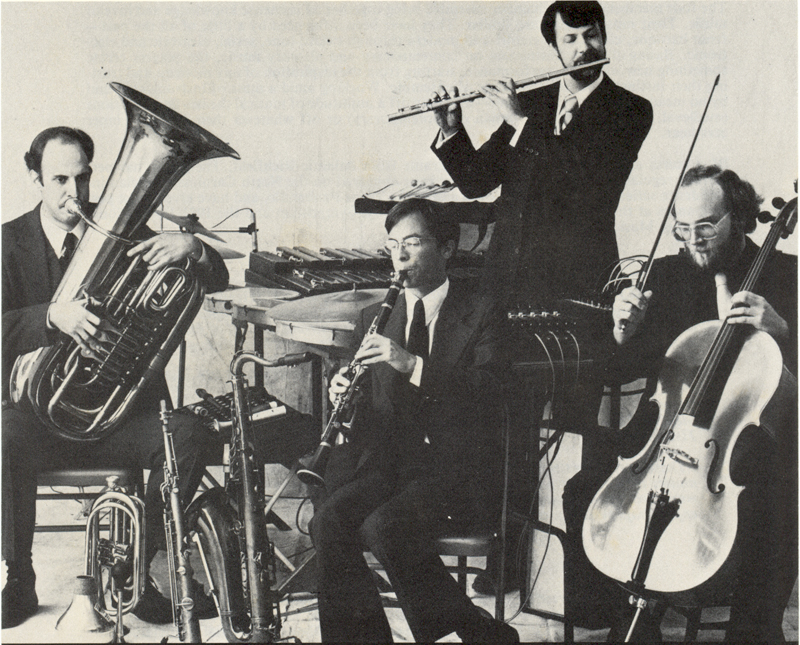
This is us playing in Carnegie Hall in 1984,
complete with three-piece suits. I'm the flute playing percussionist standing in the center:
Gregory Sandow's Village Voice Review of our record upon the
occasion of the Carnegie Hall performance.
Lawson Taitte's Texas Monthly Article
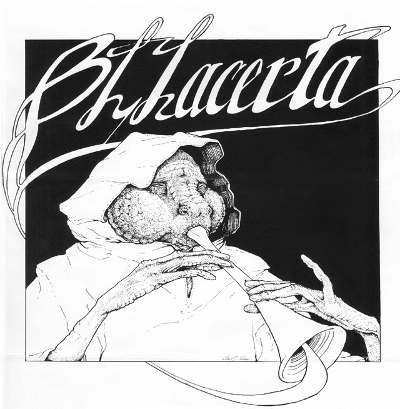
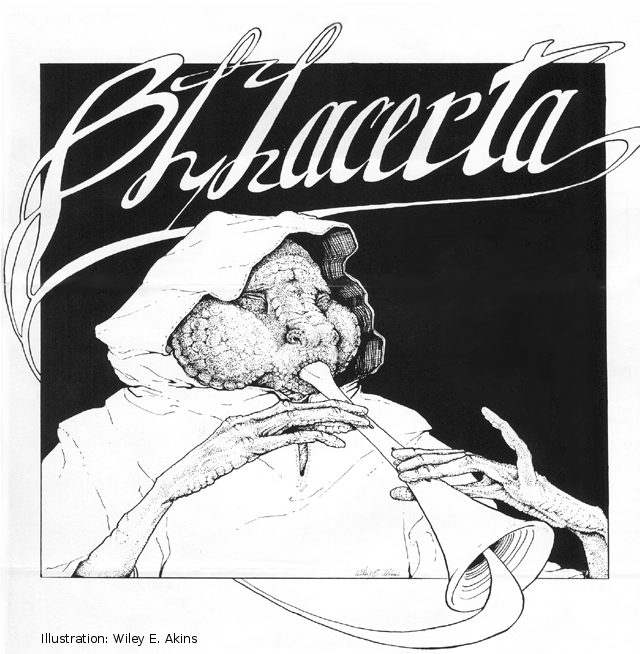
Wiley Akins created an un-ending flow of artwork for our concerts, fliers, posters, and programs,
and especially a series of music-playing lizards ("lacertas"). This is one of my favorites.
Somewhere along the line, I learned how to write computer software, and discovered that it is amazingly similar
to composing music, and generally pays a lot better. I tell my artist friends, only half in jest, to be very
careful that they don't learn a sale-able skill, a profession to "fall back on" as we used to say, because one
day you will!!! Composing and performing now occupy a significantly smaller proportion of my life, and the wonders
of fatherhood and the excitement of exploring the unknown waters of cyberspace and science and robotics generally
fire my imagination more in these days. I still find I have to grab the marimba mallets or sit down at the piano
from time to time, to calm my restless heart and give vent to the non-verbal, the un-say-able, the hidden places and
parts of my being. Putting together this web page has really reminded me of just how much that is.
16 August 2002
Dallas, Texas
dpa
*The Before Time. Stardate 2713.5, the Onlys refer to the time when grups (grownups) were still among us as "The Before Time." I think of it the same way.
Back to my homepage.

last update: 16 April 2025 dpa
SMU (c) 1993-2014 David P. Anderson
This work is licenced under a
Creative Commons License.

 I pretty much stopped composing when I began performing, in 1979, with the
BL Lacerta
Quartet, of which more is written below, and which had a profound influence
on my life. So after a 15 year hiatus from composing, I ventured back into the woods with some trepidation.
Most of my recent music has been much more traditional melodic and rhythmic compositions, written
on the computer (who'd of guessed?) using my
son Jonathan's electronic keyboards, and often inspired by the machines' capabilities.
I pretty much stopped composing when I began performing, in 1979, with the
BL Lacerta
Quartet, of which more is written below, and which had a profound influence
on my life. So after a 15 year hiatus from composing, I ventured back into the woods with some trepidation.
Most of my recent music has been much more traditional melodic and rhythmic compositions, written
on the computer (who'd of guessed?) using my
son Jonathan's electronic keyboards, and often inspired by the machines' capabilities. 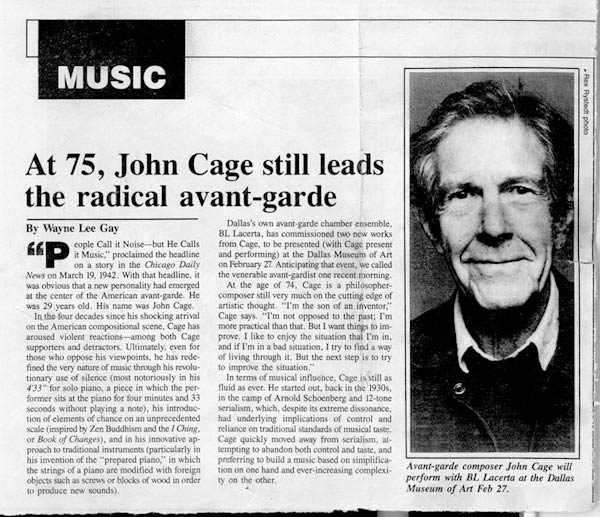 and the pride I've taken in my music and performances, I've never experienced that same sense
of reverence, of walking off stage loving my fellow musicians, awed by what we had just experienced."
That says it exactly for me.
and the pride I've taken in my music and performances, I've never experienced that same sense
of reverence, of walking off stage loving my fellow musicians, awed by what we had just experienced."
That says it exactly for me.